



Finding a great pair of boots is only half the battle — making sure they fit perfectly and feel comfortable from the first wear can be just as important. If your boots feel snug or tight in certain areas, learning how to stretch boots properly can expand their fit without compromising durability or style. Whether you’re breaking in a new pair of work boots or adjusting snug hiking boots before a big trek, proper stretching techniques make a significant difference in comfort and foot health.
In this guide, we’ll walk through practical, professional methods for stretching boots safely, what to watch out for, and when it’s better to seek expert help.
Why Proper Boot Fit Matters
A properly fitting boot provides:
- Comfort during long wear
- Reduced risk of blisters and hotspots
- Improved performance in active settings
- Better posture and gait alignment
Ill-fitting boots — whether too tight around the toe box, heel, or instep — can cause discomfort, pain, and even injury over time. Knowing how to stretch boots strategically helps preserve the boot’s structure while adapting the fit to your foot’s unique shape.
What Causes Boots to Feel Tight?
Before diving into stretching methods, it’s helpful to understand why boots might feel tight:
- New leather that hasn’t softened yet
- Boot width or toe-box too narrow
- Unique foot shape (high instep or wide forefoot)
- Sock thickness differences
- Boot construction materials that are less flexible
Each of these factors influences how a boot feels and responds to stretching. Leather, for instance, naturally molds to your foot over time — but some situations require a faster or more targeted approach.
Safe and Effective Methods to Stretch Boots
1. Wear Them With Thick Socks
One of the easiest ways to stretch boots gradually is by wearing thick or two pairs of socks while breaking them in. This technique allows the leather to soften while also creating slight expansion around snug areas.
How to do it:
- Put on thick socks and wear the boots at home for short periods.
- Walk around on carpeted areas to avoid scuffing soles.
- Gradually increase wear time as comfort improves.
This method is gentle and works best for mild tightness.
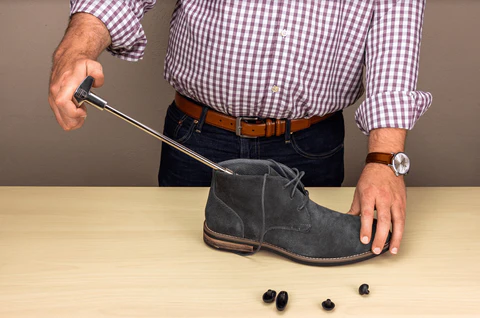
2. Use a Boot Stretcher Tool
Boot stretchers are tools designed to expand the width and sometimes the height of the boot.
Steps:
- Insert the stretcher into the boot.
- Turn the knob to expand width.
- Let the stretcher sit overnight (up to 24-48 hours).
- Test fit and repeat as needed.
For best results, focus on the area that feels tight — forefoot, instep, or toe box.
3. Apply Stretching Spray
Stretching sprays soften leather fibers, making them more pliable and easier to expand.
Application tips:
- Spray the inside of the tight area lightly.
- Use in combination with wearing thick socks.
- Avoid over-saturating, which could weaken leather if done excessively.
This method is excellent for targeted stretching without altering the entire boot.
4. Heat Treatment Methods
Heat can help leather stretch more easily — but it must be used cautiously to avoid damage.
How to use heat safely:
- Wear thick socks and put on the boots.
- Use a hairdryer on low heat, focusing on tight areas.
- Move your feet inside the boot while warming.
- Keep the boots on as they cool to help them conform to your feet.
Avoid excessive heat that can dry out or crack leather. Follow up with leather conditioner to maintain suppleness.
Professional Stretching Techniques
If DIY methods don’t deliver the comfort you need, a professional cobbler or shoe repair specialist can stretch boots precisely using industrial stretchers and expertise. Professionals can:
- Target specific zones
- Adjust width without altering foot length
- Maintain structural integrity
- Work with various materials (leather, suede, synthetic)
This option is especially valuable for high-end or expensive boots where precision matters.
How Long Does Boot Stretching Take?
Stretching time varies depending on the method and boot construction:
- Thick socks method: Several wear sessions over days or weeks
- Boot stretcher tool: 24–48 hours per session
- Stretching spray: Immediate flexibility with gradual expansion
- Professional stretching: A few hours with precision results
Patience is key — rushing the process with excessive force or heat can damage materials and shorten boot life.
Tips for Long-Term Comfort and Fit
To maintain the ideal fit after stretching:
- Break in gradually: Don’t wear tight boots for long hikes or workdays immediately.
- Condition leather regularly: Leather moisturizes and stays flexible.
- Avoid wet conditions until fully stretched: Water can tighten leather without proper conditioning.
- Choose the right socks: Performance or tactical socks help protect feet and support fit.
These habits reinforce comfort and extend the lifespan of your footwear.
When to Replace Rather Than Stretch
In some cases, stretching isn’t the best solution:
- Boots that are too short in length
- Severely tapered toe boxes
- Structural damage or degradation
- Boots made from non-stretchable synthetic materials
If the boot simply isn’t the right shape for your foot, consider investing in a pair designed for your needs — comfort starts with an appropriate base fit.
Final Thoughts
Knowing how to stretch boots properly empowers you to customize fit without sacrificing quality or comfort. Whether you use thick socks, boot stretchers, light heat, or professional services, the goal is to adapt the boot to your foot while preserving its structure and performance.
When your boots fit well, every step feels more natural — reducing fatigue and enhancing confidence in every environment, from work sites and trails to everyday wear.
For trusted footwear solutions and expert guidance on selecting boots that fit your lifestyle and performance needs, visit BootsPlusMore, your destination for quality boots, tactical footwear, and all-day comfort footwear for every activity.