



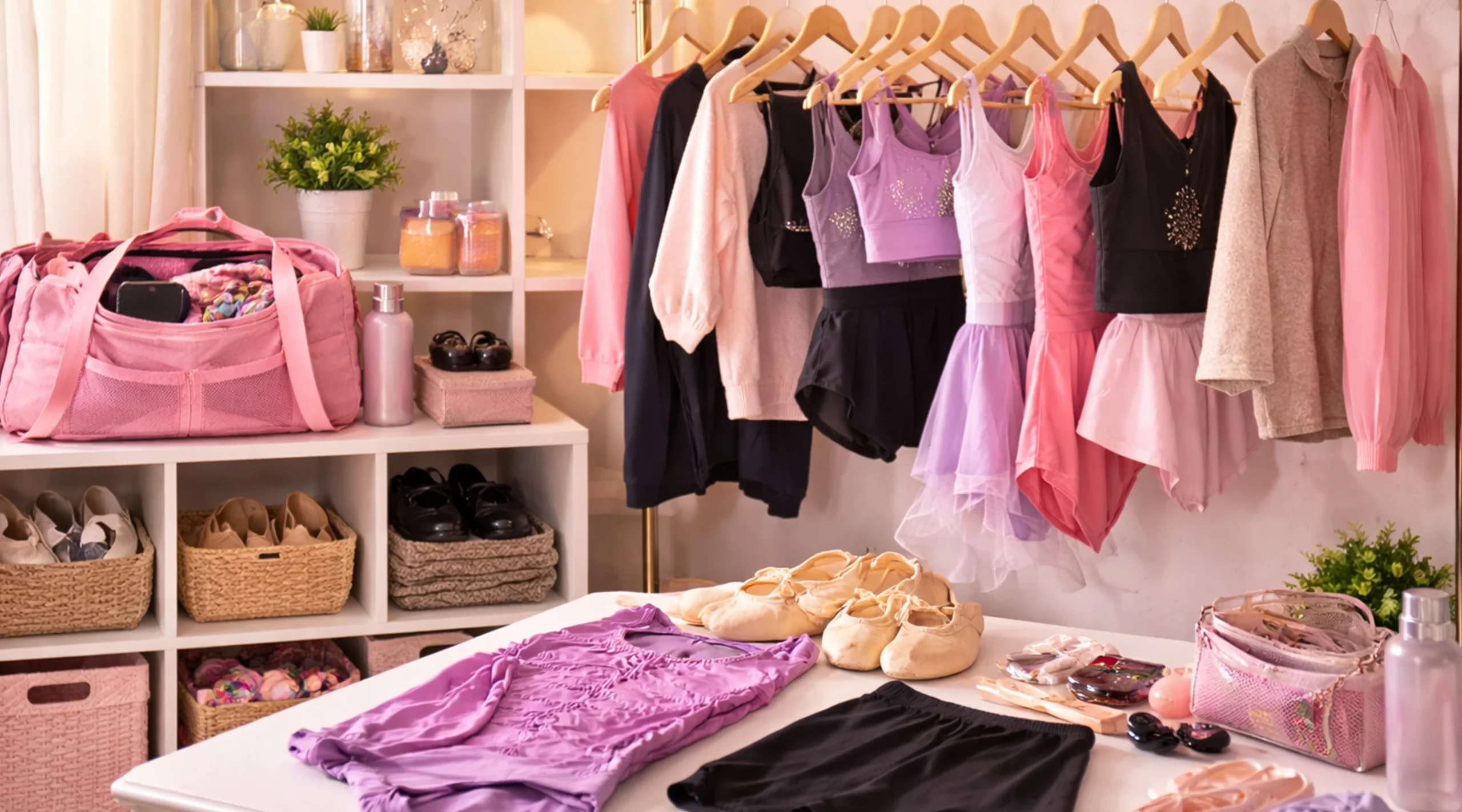
A single leotard rarely covers every training need a serious dancer encounters throughout a full season. Between daily technique classes, rehearsal days, and performance events, building a thoughtful rotation of dance leotards matters just as much as choosing any individual piece, since the right wardrobe balances practicality, durability, and versatility across very different demands.
The foundation of any dance leotard wardrobe should be a handful of reliable, solid-colored basics built for daily class wear. These pieces take the most consistent wear and tear across a training season, so prioritizing durable fabric blends and reinforced construction here matters more than chasing trend colors or embellished designs. Having two or three interchangeable basics in a similar cut allows for laundry rotation without disrupting a dancer’s routine, while keeping replacement costs manageable since these pieces are essentially workhorses rather than statement items.
Beyond daily basics, most dancers benefit from at least one or two leotards suited specifically to their primary discipline’s technical requirements. A ballet-focused dancer typically wants a more fitted, structured cut that clearly shows alignment through the torso and hips, while a contemporary or jazz dancer may prioritize slightly more ease through the body to support a broader range of movement styles. Building a wardrobe around discipline-specific fit, rather than assuming one universal cut serves every class equally well, helps avoid the common frustration of a leotard that looks fine but subtly restricts technique during actual training.
Seasonal and layering considerations also deserve a place in wardrobe planning. Long-sleeve or thicker fabric leotards suit colder studio environments or early morning rehearsals where muscle warmth matters, while lighter, more breathable options work better for warmer months or high-intensity summer intensives. Dancers training year-round benefit from having both weights available rather than relying on a single fabric weight across every season, since this affects both comfort and injury prevention during extended training periods.
Performance and showcase pieces represent a distinct category within a well-planned wardrobe, separate from daily training basics. These leotards typically prioritize visual impact, through embellishment, color, or unique cut, over the simplicity that suits daily wear, and are generally reserved for recitals, competitions, or special showcases rather than regular class rotation. Keeping these pieces separate from the daily rotation also helps preserve their condition and appearance for the specific events they are intended for.
For studios coordinating team or recital wardrobes, wardrobe planning becomes considerably more complex, since consistency across dancers with varying body types matters as much as individual fit. Working with a supplier that offers a genuinely broad size range within a consistent cut helps studios avoid the common pitfall of a uniform look that fits some dancers well and others poorly, a problem that can undermine an otherwise cohesive team presentation.
Growth and body changes deserve particular consideration for younger dancers and teens, whose sizing needs may shift meaningfully across a single training season. Building a wardrobe with this in mind, rather than investing heavily in expensive pieces likely to be outgrown quickly, often means prioritizing quality basics that can be replaced affordably as needed, while reserving higher investment for performance pieces with a shorter, more predictable usage window.
A well-planned leotard wardrobe ultimately comes down to matching pieces to their actual purpose rather than purchasing reactively for each individual need as it arises. Dancers, parents, and studios looking to build a versatile, season-ready rotation of training and performance leotards can explore a full range of options at Tiger Friday, where quality construction and studio-ready style support every stage of a dancer’s wardrobe planning.
