


Replacing worn stairs with wood stair treads can make a home feel cleaner, warmer, and more finished. It can also improve how the staircase ties into nearby flooring, trim, and interior details. But the final result depends on more than choosing the right wood species or stain color.
Installation matters just as much. One of the most important parts of the project is the adhesive. If the wrong adhesive is used, the treads may squeak, shift, cup, bow, or fail over time. That is why homeowners and contractors should understand adhesive selection before starting a stair remodel.
Stair Treads Need a Strong Bond
Stairs handle repeated weight and movement every day. Each step must stay secure against the substructure. Fasteners such as nails or screws help hold the tread in place, but adhesive helps create a wider bond between the tread and the surface below.
WoodStairCo explains that mechanical fasteners hold treads in position, but adhesive helps reduce tiny movement between the tread and substructure, which is a common source of stair squeaks.
This matters in busy homes, rental properties, and remodels where stairs are used many times a day.
Not Every Construction Adhesive Is Right for Wood Stairs
It can be tempting to grab any construction adhesive from a hardware store, but solid wood reacts to moisture. Some adhesives introduce water into the bond. That moisture can affect the wood and may cause cupping, bowing, or warping.
WoodStairCo states that PL Premium Polyurethane Construction Adhesive is the only adhesive it recommends for its hardwood stair treads. The guide explains that PL Premium is water-free and bonds wood to plywood, concrete, or existing wood framing without introducing moisture that can damage solid wood.
This is especially important for prefinished wood products because moisture-related movement can damage the look and performance of the tread after installation.
Surface Preparation Makes a Big Difference
Even the correct adhesive can fail if the surface is not prepared. Dust, oil, wax, old finish, loose material, or old adhesive can weaken the bond.
Before installing, the surface should be clean, dry, stable, and ready for bonding. Existing wood surfaces may need scuff-sanding. Concrete should be dry. Old debris should be removed.
WoodStairCo notes that skipping surface prep is one of the most common causes of adhesive failure during stair tread installation.
Taking time here can help prevent avoidable problems later.
Application Pattern Matters
The adhesive pattern depends on the tread type. Retro overlay treads and traditional replacement treads may need different bead patterns because they contact the stair structure differently.
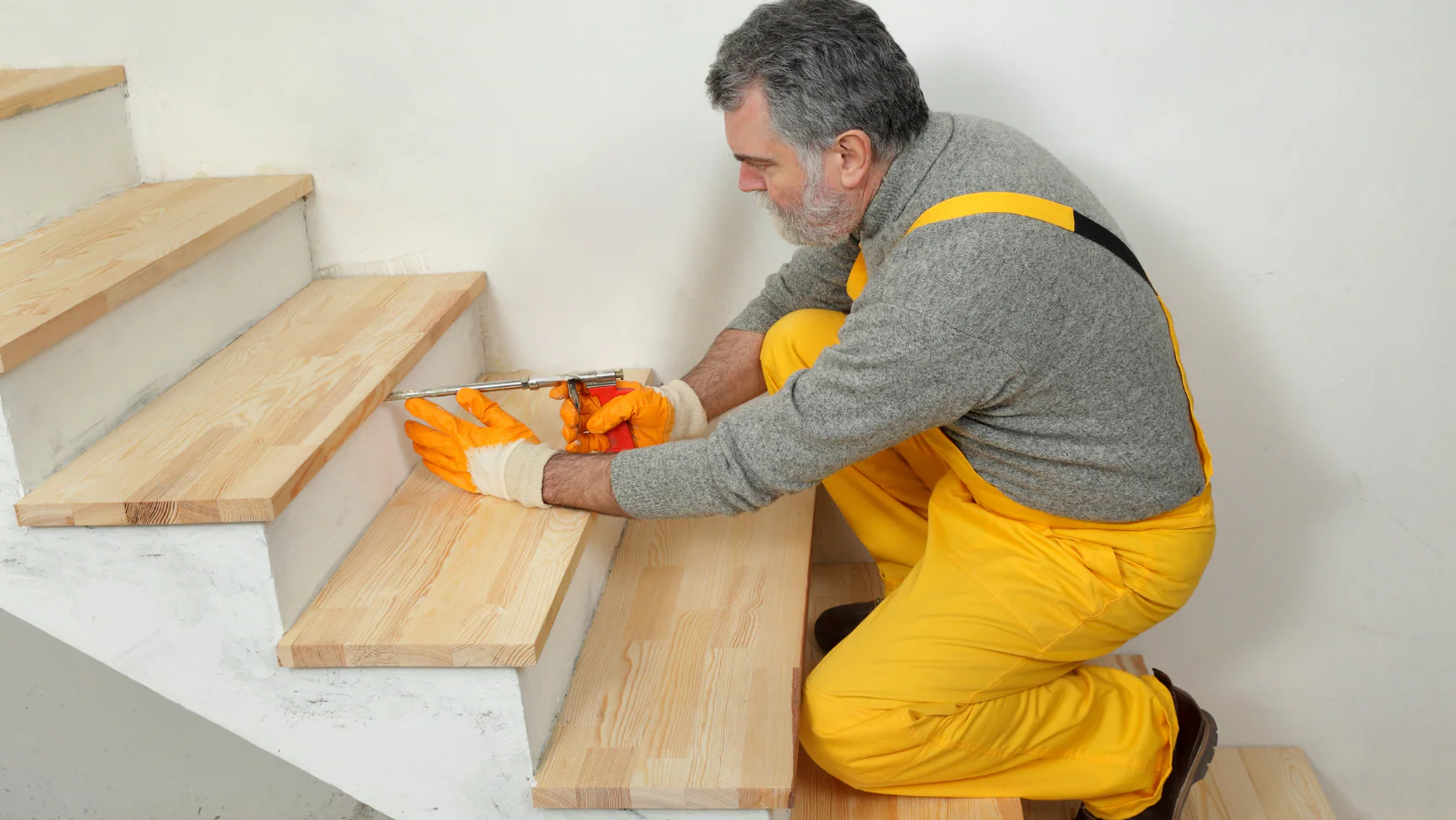
WoodStairCo’s guide says retro treads require a full serpentine bead pattern, while traditional replacement treads use two parallel beads along the stringer length. The guide also recommends allowing at least 24 hours of cure time before foot traffic.
This means installation should be planned around downtime. Homeowners may need to avoid using the staircase during cure time or plan the project when another route is available.
Where to Learn More Before Installing
Before installing stair treads, WoodStairCo’s adhesive guide is a helpful resource for understanding which adhesive to use, what mistakes to avoid, and how cure time affects the project.
Final Thoughts
A good stair remodel is not only about the visible wood surface. The bond underneath matters too. The right adhesive, clean surface prep, correct bead pattern, and enough cure time all help support a longer-lasting result.